Platform Governance
Part of Ecommerce vendor and agency evaluation
Documenting the platform decision for future teams
Create an ecommerce platform decision record with the chosen configuration, evidence, trade-offs, open assumptions and review triggers.
Record the platform decision so a future team can see what was chosen, why it met the store's needs and which assumptions still need checking. Keep the main record short and attach the evidence needed to revisit it. Calling the choice “best” does not explain the trade-offs accepted.
State the choice and its evidence
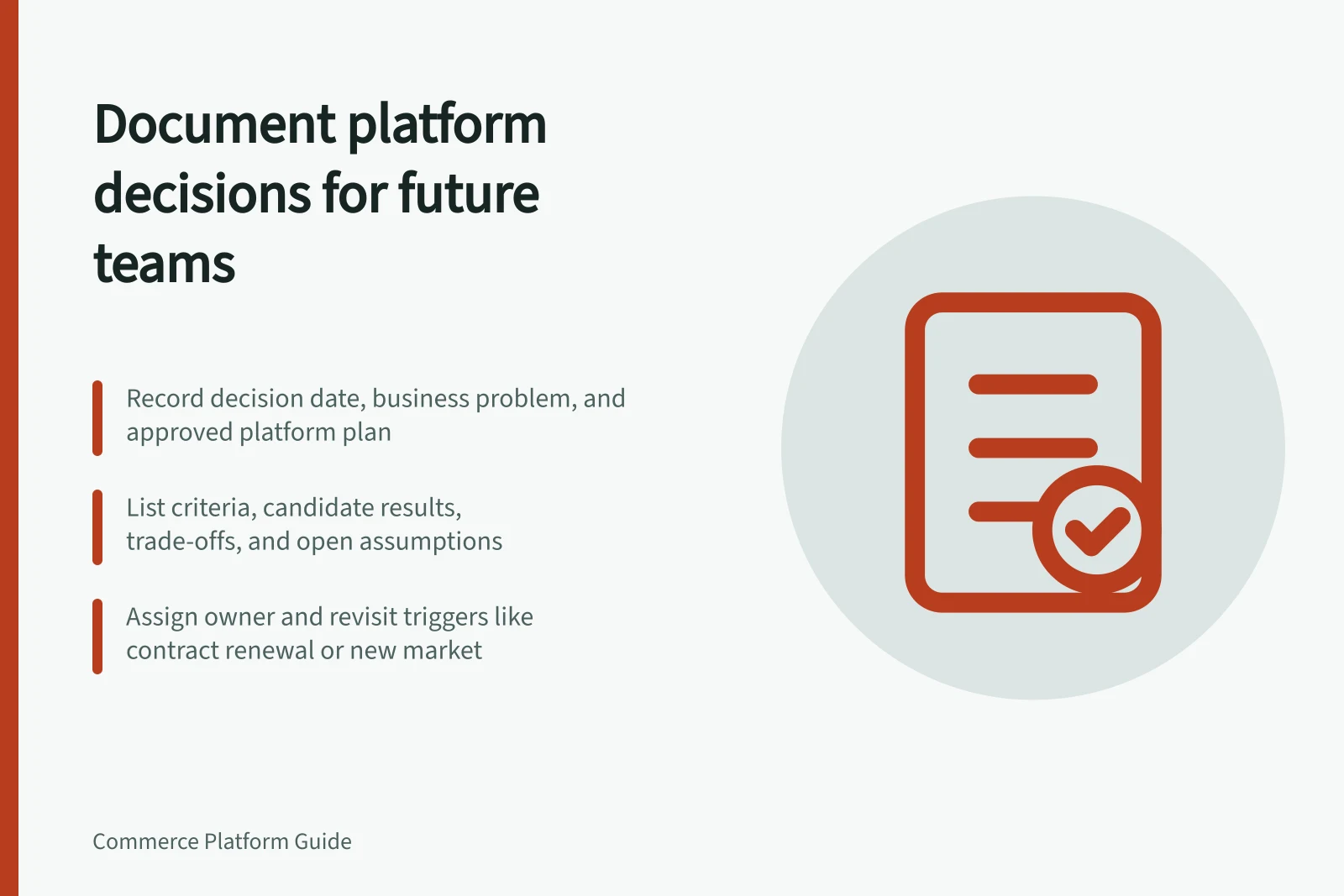
Start with the decision date and business problem. Identify the approved platform and plan, storefront route, major apps or custom components, payment route and implementation supplier. Record the release scope and the Australian customer and delivery paths that mattered.
List the essential criteria and each candidate's result. Separate what a supplier demonstrated from what it documented or promised. If checkout was shown only with a test gateway, retain that limit. If an integration was priced but not built, record it as an acceptance dependency.
Field / What the next team needs
- Requirement
- Customer or staff outcome behind the choice
- Evidence
- Demo result, document or proposal version
- Trade-off
- Accepted limitation and reason
- Assumption
- Condition that must remain true
- Owner
- Person responsible for an open point
- Revisit trigger
- Change that calls for a fresh evaluation
Key Metrics from Platform Evaluation
- 4Number of shortlisted platforms
- 2Suppliers demonstrating checkout flow
Preserve alternatives and commercial boundaries
Name the shortlisted alternatives and briefly explain why each was set aside. Use criteria, not just a score.
One option might require more integration work; another might leave an essential checkout condition unresolved in its proposed plan. Label a demonstrated finding and an unverified supplier claim differently. Do not record an untested limitation as a tested failure.
Keep the accepted quote and scope version with the decision. Note exclusions, recurring support and who maintains added code or services. Otherwise, a later team may see the invoice without the assumptions that shaped the choice.
Give the record a way to stay useful
Name an owner and review triggers, such as a new market, a changed product model, contract renewal or a persistent gap in the required order path. When an assumption changes, add a dated revision while retaining the original rationale.
Point to current configuration notes, supplier contacts, access ownership and open acceptance issues. Store credentials only in the business's approved access system; the decision record needs an owner and location, not passwords.
The record is useful when someone who missed the demos can explain the choice, identify what remains unproven and know when to reconsider it. It preserves the selection rationale rather than trying to govern every later platform change.